.jpg)
.jpg)
The art of stewing and the nourishing value of 9 traditional Chinese herbs
In East Asian cuisine—especially in herbal slow-cooked stews—traditional Chinese herbs are not only used for flavor, but also for their health-enhancing properties. The harmonious combination of fresh ingredients and medicinal herbs creates dishes that are easy to digest, warming to the body, and ideal for overall nourishment. Below are nine commonly used Chinese herbs in herbal stews, along with their notable health benefits.
1. Chinese Yam (Huai Shan / Shan Yao)
Chinese yam is well known for strengthening the spleen and stomach, supporting digestion, and boosting physical vitality. It is often used in nourishing dishes for those who need replenishment while still preferring meals that feel light and gentle on the stomach.
2. Goji Berries (Gou Qi Zi)
Goji berries have a naturally mild sweetness and are commonly used to support liver health, improve eyesight, and strengthen the immune system. In cooking, they add a delicate sweetness while helping nourish the body from within.
3. Codonopsis Root (Dang Shen)
Codonopsis is a familiar herb valued for boosting energy (qi), reducing fatigue, and aiding recovery. It is especially suitable for people who experience frequent stress, exhaustion, or low energy levels.
4. Longan (Long Yan Rou)
Dried longan is known for nourishing the blood, calming the mind, and promoting better sleep. Its natural sweetness makes herbal stews more enjoyable and creates a soothing, relaxing effect after a meal.
5. Red Dates (Jujube)
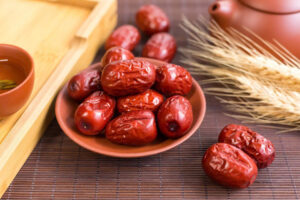
Red dates are widely used in herbal stews for their blood-nourishing properties, digestive support, and ability to balance other herbs in the recipe. They also add a natural sweetness that brings harmony to the overall flavor.
6. Angelica Root (Dang Gui)
Angelica is famous for nourishing the blood and supporting healthy circulation. In wellness-focused cuisine, it contributes a distinctive aroma and is commonly included in dishes designed to replenish and restore the body.
7. Ligusticum (Chuan Xiong)
Ligusticum is used to promote blood circulation, support overall vitality, and relieve fatigue. When used in appropriate amounts in cooking, it helps the body feel lighter and more balanced.
8. Eucommia Bark (Du Zhong)

Eucommia bark is traditionally known for supporting liver and kidney health, strengthening bones and joints, and improving physical endurance. It is well suited for long-term nourishment or for those with active lifestyles.
9. Rehmannia Root (Sheng Di Huang)
Rehmannia has cooling properties and is commonly used to nourish the blood, clear internal heat, and help maintain balance within the body. In herbal stews, it adds a gentle, soothing quality to the dish.
The Value of Herbal Stews in Modern Meals
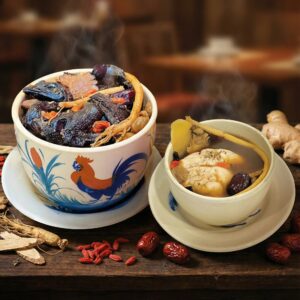
The thoughtful combination of these nine herbs in herbal stews offers more than just a distinctive flavor—it creates a meal that is nourishing, warming, and easy to digest. In today’s fast-paced lifestyle, herbal stews have become an ideal choice for those seeking health replenishment, managing work-related stress, or simply enjoying a light yet nutrient-rich meal.
When enjoyed properly, with suitable portions and frequency, herbal stews allow the body to truly experience the essence of wellness-focused cuisine—where food is not only meant to taste good, but also to support long-term health and well-being.
![[NEW] THE “MASTERPIECE” KOREAN GINSENG CHICKEN SOUP (SAMGYETANG): EAT FOR HEALTH, ENJOY FOR LOVE](https://foodlabvina.vn/wp-content/uploads/2026/03/z7589612700656_facbc200099bff538b47a72fc0ab0120-scaled.jpg)